Money · Explainer
Nvidia reinstates Jensen Huang as CEO 11 days after he resigned, and the stock soars about 30%
Eleven days after Jensen Huang resigned over affair revelations, including one with a Megaspeed executive under US investigation as an alleged Chinese spy, Nvidia's board brought him back unanimously. The stock, down a third since he left, jumped about 30% in early trading Monday.
Updated Nov 23, 2026, 2:10 PM CT: afternoon trading put Nvidia up about 32% near $166, Trump told CNBC he convinced the board to bring Huang back, and leaders in both parties in Congress pushed back.
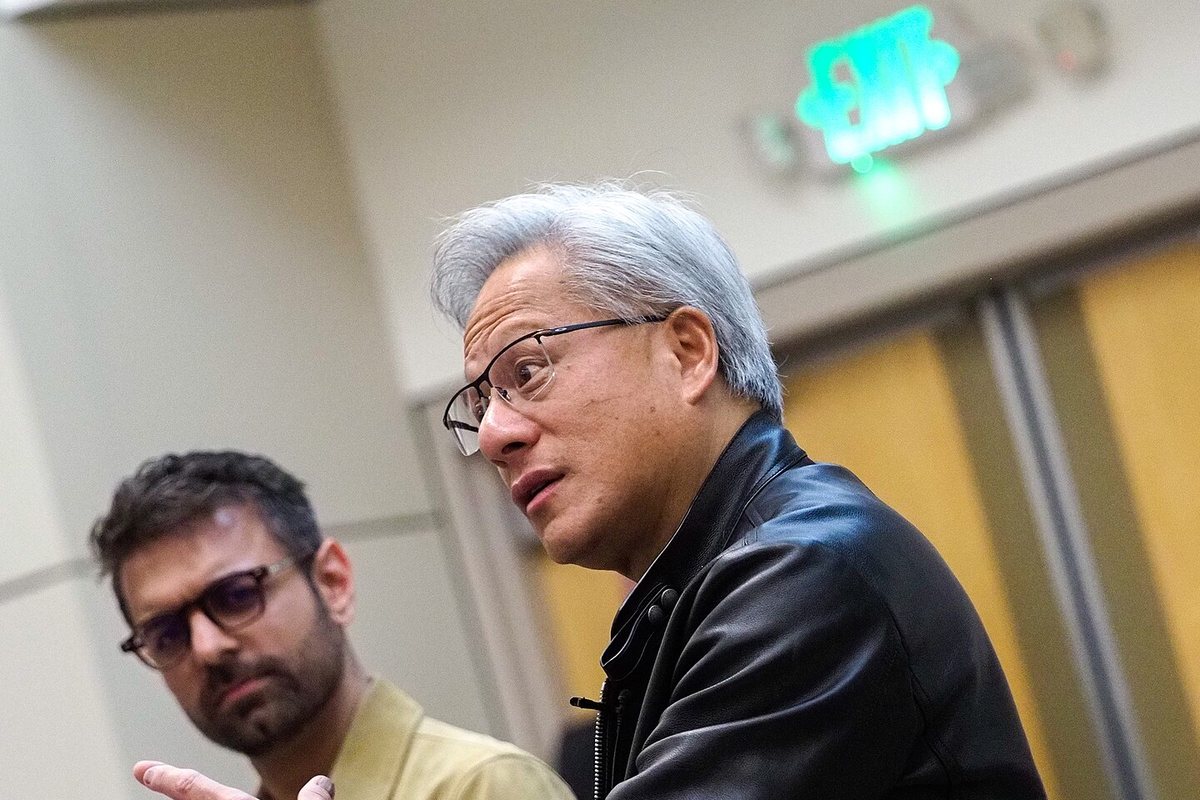

Watch: "Nvidia Board Reinstates Jensen Huang as CEO", from Bloomberg Podcasts on YouTube.
Update, November 23: the rally held into the afternoon, and Washington split over the return
The morning's early-trading surge did not fade. In afternoon trades, Nvidia stock surged more than 32% to $166.21, according to Investor's Business Daily. Barron's put the stock up 32% to $166.01, on pace for its largest one-day percentage increase since May 9, 2003, with the Nasdaq Composite up 7.5%. USA Today reported the Dow up about 3% at midday, gaining nearly 1,500 points, with the Nasdaq up 6.7% and the S&P 500 up nearly 5% — a broad rally the paper tied directly to Huang's return.
President Donald Trump took personal credit for the reinstatement in an interview with CNBC shortly after the announcement. According to USA Today, Trump said he spoke "directly and indirectly" to Nvidia's board, adding: "I spoke to them, let me put it that way. And I convinced them. I made the deal." Trump said the board had asked for assurance on the national security threat, and that "we gave them assurance, at least with everything we know."
The reaction on Capitol Hill was sharply critical, and not only from Democrats. House Democratic Leader Hakeem Jeffries called the reinstatement "indefensible, irresponsible and incomprehensible" in a statement reported by USA Today, and said Congress "will not be deterred in conducting a swift, thorough and wide-ranging investigation" into Nvidia and Commerce Secretary Howard Lutnick's handling of chip export controls. Senate Democratic Leader Chuck Schumer pledged that Democrats will use their full power to investigate the administration, Huang and other Nvidia executives. Republican Sen. John Cornyn asked on social media, "No national security risk? Based on what?" and Republican Rep. Don Bacon of Nebraska said Huang was "compromised and exploited by a Chinese spy" and that Nvidia should have moved on without him.
Wall Street analysts were mostly positive, with caveats. Investor's Business Daily reported that Wedbush's Dan Ives reiterated an outperform rating with a $225 price target, Mizuho's Vijay Rakesh kept an outperform rating at $220, and Stifel's Ruben Roy reiterated a buy at $205. Bernstein's Stacy Rasgon upgraded the stock to outperform with a $200 target but called the board's on-again, off-again handling "clown-like," noting the board had been adamant just last week that Huang was gone for good. The same report noted that Arm Holdings CEO Rene Haas, a leading external candidate for the Nvidia job, took himself out of contention on Monday.
Jensen Huang is Nvidia's chief executive again. The company announced Monday that its board voted unanimously to reinstate Huang as president and chief executive officer and as a member of the board, effective immediately, 11 days after he resigned. Nvidia announced the decision in a press release before the opening bell, and the stock jumped about 30% in early trading.
Key facts
What the board said
Nvidia said in its press release that the board was satisfied with respect to Huang's candor and ability to lead NVIDIA. Board Chair Harvey Jones said: "The Board believes Jensen is the right person to lead Nvidia, and that his reinstatement is in the best interests of our stockholders, employees, partners, and customers." Colette Kress, the chief financial officer who served as interim CEO during Huang's absence, remains CFO.
The government input, and the investigation that continues
The release said Nvidia "received input from senior levels of the United States government," and that on that input the board is confident Huang's reinstatement poses no national security risk. The company also said its independent investigation into reporting that Huang "has been the target of a foreign intelligence effort" will continue. That reporting sits at the center of this morning's TrendBrief explainer on the Megaspeed probe, which covers the US investigation of Megaspeed executive Alice Huang, whom officials are investigating as an alleged Chinese spy.
Why Huang resigned
Huang resigned around November 12 after revelations of at least two extramarital affairs, including one with Alice Huang, an executive at data center company Megaspeed, according to Reuters, The Wall Street Journal and Barron's. US officials are investigating Alice Huang as an alleged Chinese spy, and the Megaspeed case has become the center of the fight over exports of Nvidia's most advanced chips.
Washington weighed in
Reuters reports the reinstatement came under pressure from President Donald Trump, who urged the board over the weekend to rehire Huang. After the announcement, Trump posted on Truth Social that the board made "the correct and proper decision." Treasury Secretary Scott Bessent struck a conciliatory tone on Meet the Press on Sunday, according to CNN and Morningstar, after a week in which the administration had publicly questioned Nvidia's leadership and its export controls.
The market reaction
The reaction was immediate, and it reached well beyond one stock. Nvidia shares were up about 30% in early trading Monday, according to CNN, Barron's and Investopedia, and Reuters reported the stock leaped 33%, up by a third, in early trading. The Wall Street Journal reported Nvidia was on pace to add about $847.8 billion in market value, which would be a record one-day gain, in its biggest one-day percentage move in over two decades. The rally reversed the slide that followed Huang's exit: the stock had lost about a third of its value in the two weeks since he left, and premarket trading put it around $164 a share, against its October 6 all-time closing high of $239.24, according to the Journal. The move lifted the whole market in early trading: the Nasdaq rose roughly 6% to 6.7%, the S&P 500 rose roughly 4% to 4.7%, the Dow rose about 2.5%, roughly 900 points, and the iShares Semiconductor ETF (SOXX) rose 12%, according to Morningstar. All of those figures are early trading numbers and will keep moving through the day.
Prediction markets flagged the news first. Kalshi posted the reinstatement on X at 8:01 AM CT with its NVDA perpetual contract up 8.3% at $152.79. That was the early premarket read, taken minutes after the announcement, before the move grew to roughly 30%.
Timeline: 11 days out and back
| Date | What happened |
|---|---|
| Oct 6, 2026 | Nvidia closes at its all-time high of $239.24 (The Wall Street Journal). |
| Around Nov 12 | Huang resigns after revelations of at least two extramarital affairs, including one with Megaspeed executive Alice Huang (Reuters, The Wall Street Journal, Barron's). Colette Kress becomes interim CEO. |
| Nov 12 to 22 | Nvidia shares lose about a third of their value in the two weeks after Huang leaves (Investopedia). |
| Weekend, Nov 21 to 22 | Trump urges the board to rehire Huang; Bessent strikes a conciliatory tone on Meet the Press on Sunday (CNN, Morningstar). |
| Nov 23, 8:01 AM CT | Kalshi flags the reinstatement on X, with its NVDA perpetual contract up 8.3% at $152.79. |
| Nov 23 | Nvidia announces the unanimous reinstatement before the open, effective immediately. Shares jump about 30% in early trading. |
What happens next
Huang is due to testify publicly before the Senate Banking Committee next month, and separately before three House committees behind closed doors, according to Morningstar. Nvidia's independent investigation into the foreign intelligence reporting continues, and export-control questions remain part of the story, as Reuters noted in its analysis of the reinstatement. For the wider market picture after last week's AI rout, see our explainer on Monday's futures rebound.
Frequently asked questions
Why did Jensen Huang resign?
He resigned around November 12 after revelations of at least two extramarital affairs, including one with Alice Huang, an executive at data center company Megaspeed whom US officials are investigating as an alleged Chinese spy, according to Reuters, The Wall Street Journal and Barron's.
Who ran Nvidia while Huang was gone?
Colette Kress, the company's chief financial officer, served as interim CEO. Nvidia's release says she remains CFO now that Huang is back.
What did the board say about national security?
Nvidia said it received input from senior levels of the United States government, and that on that input the board is confident Huang's reinstatement poses no national security risk. The company's independent investigation into reporting that Huang was the target of a foreign intelligence effort will continue.
How much did Nvidia's stock move?
Shares were up about 30% in early trading Monday, according to CNN, Barron's and Investopedia, and Reuters put the early leap at 33%. The Wall Street Journal reported the stock was on pace to add about $847.8 billion in market value, a record one-day gain. The stock had lost about a third of its value in the two weeks since Huang resigned.
Is the investigation over?
No. Nvidia says its independent investigation continues, and Huang is due to testify before the Senate Banking Committee next month and before three House committees behind closed doors, according to Morningstar.
Sources: Nvidia press release · Reuters · Reuters VIEW · CNN · The Wall Street Journal · WSJ live coverage · Investopedia · Barron's · Morningstar · Kalshi on X · USA Today, Nov 23 afternoon coverage · Investor's Business Daily · Barron's, partner stocks rally